

1. 12-tygodniowy plan treningowy
Otrzymujesz plan treningowy, który pasuje do Twojego grafiku i możliwości.

For volleyball players who:
Couldn't load pickup availability

Plan dostaniesz w odrazu po zakupie!
Plan przeznaczony jest na 12 tygodni ale po upływie/zakończeniu tego czasu, możesz na spokojnie zacząć plan od nowa i dalej z nim progresować - więc możesz go używać ile chcesz!
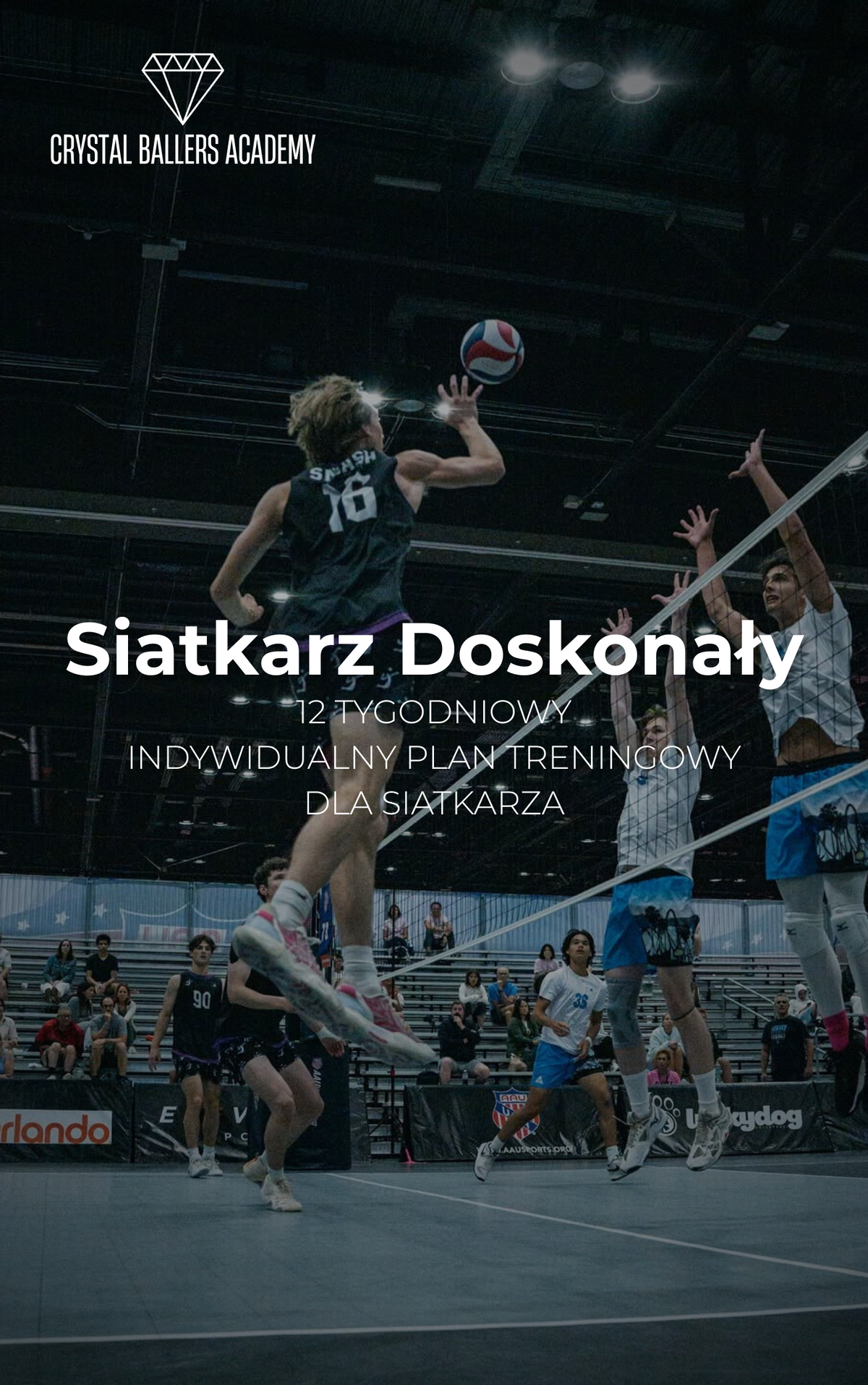

Wyższy wyskok w ataku i bloku, bez dokładania sobie objętości skoków
Mocniejsze uderzenie, które bierze się z bioder i tułowia, nie z samego barku
Szybszy start i pracę nóg w obronie oraz przy przyjęciu
Bark i kolana, które wytrzymują pełen sezon
Powtarzalność — piąty set wygląda u Ciebie jak pierwszy
Ciało, które nie odpuszcza w bezpośrednich pojedynkach na siatce
„Siatkarz Doskonały” to indywidualna wersja programu, stworzona dla zawodników, którzy stawiają sobie najwyższą poprzeczkę.
Plan ma jedno zadanie: przygotować Cię jak najlepiej do każdego meczu i podnosić Twoje możliwości motoryczne.
Pracujesz nad siłą, mocą wyskoku, dynamiką, mobilnością barku i wytrzymałością skokową, czyli obszarami, które dzielą dobrego zawodnika od wyróżniającego się.
Oto, co trafia w Twoje ręce po zakupie:
Otrzymujesz plan treningowy, który pasuje do Twojego grafiku i możliwości.
Szczegółowe omówienie całego programu i metod, na których się opiera. Dzięki niej zrealizujesz plan dokładnie tak, jak został zaprojektowany.
Przy każdym ćwiczeniu znajdziesz nagranie pokazujące prawidłową technikę wykonania.
Dostajesz dodatkowo porady dietetyczne, które pomogą osiągnać ci szczytową formę.
Hi! My name is Jakub Bajołek and I do strength and conditioning for athletes. Thanks to my individual approach and the techniques I picked up on strength and conditioning courses, hundreds of athletes have hit their goals and got into the best shape of their lives. I am a certified strength and conditioning coach and I have been in this field for years — that experience got me to the point where I know exactly what works and what does not.
One important thing. I am an active athlete myself, and every training plan I write I test on my own skin first. I am not a coach who knows the subject only from books and courses. You can see the results on me and on my players. So when you work with me, you can bank on reaching your goals.



Za cały program płacisz 49,99 zł - mniej więcej trzy razy mniej, niż zapłaciłbyś za jeden trening personalny.
W środku czeka na ciebie ponad 12 tygodni treningów od 2-5 razy w tygodniu, co daje nie całe 4zł tygodniowo.

Każda jednostka treningowa musi mieć konkretne zadanie: podnieść Twoje możliwości motoryczne i nie wejść w drogę regeneracji po meczach oraz zajęciach z drużyną.
Tu pomyłka kosztuje najwięcej. Za dużo objętości, przypadkowo dobrane ćwiczenia albo kombinowanie z intensywnością odbijają się spadkiem wyskoku, wolniejszą pracą nóg, bolącym barkiem albo urazem.
Dlatego w „Siatkarskiej Dominacji" znalazły się wyłącznie rozwiązania przepracowane wcześniej z setkami zawodników. Takie, które: